Artificial Intelligence has reshaped the technology world faster than any other innovation in history. From code generation to UI creation, optimization, debugging, and deployment, AI is transforming how software is built. With advanced tools like GitHub Copilot, ChatGPT Code Assistant, Cursor AI, and custom LLM-powered engineering systems, the development world is facing an important question:

Will AI replace developers in 2026 — or will the best developers be those who know how to use AI?

This article dives deep into how AI is influencing development roles, what skills will remain irreplaceable, which tasks AI can automate, and what developers must learn to stay relevant, competitive, and unstoppable.

Will AI Replace Developers in 2026?

Despite huge advancements in AI-driven coding tools, AI will not replace developers in 2026 — but it will replace developers who refuse to adapt. Companies will prefer developers who can work alongside AI to improve productivity, accuracy, creativity, and speed. AI is powerful at automating repetitive tasks, generating boilerplate code, suggesting optimizations, and debugging. However, AI still lacks understanding of business logic, product strategy, creativity, emotional design, critical problem-solving, and human-level decision-making. Rather than a replacement, AI is becoming a superpower tool, assisting developers, not eliminating them.

Key Insight

AI won’t replace developers. Developers using AI will replace developers who don’t.

What AI Can Already Do in 2026

AI has evolved massively and can now handle tasks that previously took teams of engineers weeks or months. AI coding assistants are integrated directly into IDEs, deployment tools, and design workflows. AI understands context, repositories, patterns, and project structures, enabling end-to-end development support. This section highlights what AI is already capable of in real engineering environments.

Tasks AI Can Perform

  • Generate code in multiple languages & frameworks

  • Debug errors & suggest fixes

  • Create unit tests & documentation

  • Build UI components & layouts

  • Analyze and refactor legacy code

  • Optimize performance & security

  • Generate planning documents & technical architecture

  • Deploy applications to cloud autonomously

AI dramatically reduces development time — but still requires skilled engineers to guide it.

What AI Cannot Replace

Even the most advanced AI systems lack deep analytical reasoning, emotional intelligence, ethical decision-making, and contextual understanding of real-world business and user needs. AI operates within the boundaries of patterns and predictions — but real innovation comes from human insight. Critical thinking, creativity, and strategic application of technology remain uniquely human skills. The future belongs to developers who combine AI with high-level problem-solving, system design, teamwork, and product thinking.

Tasks AI Cannot Fully Replace

  • Product vision & business strategy

  • Creative UI/UX design with emotional impact

  • System architecture & large-scale conceptual design

  • Complex debugging requiring domain knowledge

  • Security and ethical decision making

  • Leadership, management & communication

Skills That Still Matter (And Always Will) in 2026

The most valuable skills in 2026 are not raw coding ability — AI already excels at that. Instead, the highest-earning developers are those who know what to build, how to design intelligent architecture, and how to solve real-world problems. These skills cannot be automated easily because they require deep thought, judgment, creativity, and experience.

Below are the top skills that will define successful developers in 2026.

1. Problem-Solving & Logical Thinking

Good developers are hired to solve problems — not just write code. AI performs tasks, but humans make decisions.

2. System Design & Software Architecture

Large-scale thinking, scalability, distributed systems, caching, load balancing, microservices, container orchestration — all require human planning.

3. Front-End Engineering + UX Understanding

AI can generate components, but it cannot emotionally connect with users.

4. Full-Stack Development & API Integration

Developers must integrate multiple technologies into cohesive systems.

5. Cloud, DevOps & CI/CD

Automation and deployment pipelines are critical for modern systems.

6. Cybersecurity & Ethical Engineering

Security threats and governance require expert human oversight.

7. Business, Product & Communication Skills

Teams are built through collaboration, not automation.

8. Creativity & Innovative Thinking

AI copies patterns — humans create new ones.

9. AI-Augmented Development

Developers must know how to use AI effectively rather than fear it.

10. Portfolio & Real-World Projects

Practical application beats theoretical knowledge.

Skills That AI Helps Automate

AI dramatically accelerates engineering workflows by automating repetitive tasks. Instead of spending hours on manual tasks, developers can now focus on architecture, problem-solving, business logic, and creativity. The developers who excel are those who use AI to increase efficiency, correctness, and speed.

AI Automates

Task AI Ability
Writing boilerplate code Excellent
Generating components Excellent
Debugging and fixing errors Very good
Writing documentation Very good
Generating tests Very good
Code optimization Good
Deployment scripts Good
Building complete systems Limited
Strategy & product thinking Very weak

AI Tools Every Developer Must Use in 2026

AI-powered development tools are not optional anymore — they are essential productivity boosters. Understanding and using these platforms increases development speed, reduces debugging time, enhances development quality, and keeps you competitive in the global job market. These tools turn developers into high-output engineering powerhouses.

Top AI Tools

  • GitHub Copilot

  • ChatGPT Code Assistant

  • Cursor AI

  • Replit AI

  • Blackbox AI

  • AWS CodeWhisperer

  • Codeium

  • Tabnine

Professionals who use AI tools regularly boost productivity by 40–60%, increasing real-world value and improving salaries.

AI vs Developer Jobs — What Changes in 2026?

The job market is evolving rapidly. Roles requiring repetitive coding are being automated, reducing demand for low-skill entry-level engineers. However, demand for skilled full-stack developers, AI-augmented engineers, DevOps professionals, cybersecurity specialists, product engineers, and cloud architects continues to grow.

Job Market Shift

Declining Roles Increasing Roles
Basic front-end coders AI-augmented full-stack developers
Junior repetitive roles Cloud & DevOps engineers
Template-based web builders System architects
Theory-only engineers Product-focused problem solvers
Manual testers AI-assisted automation QA

Final Verdict — Who Wins? AI or Developers?

AI is not competing against developers — it is competing against developers who refuse to evolve. The winners are those who combine human creativity, business intelligence, problem-solving, and architectural understanding with AI-assisted development. Future engineers must pivot from “How do I write code?” to “How do I build systems and solve problems?” That shift makes developers irreplaceable.

Conclusion

AI plus a skilled developer is unstoppable. AI without a developer is useless.
Developers without AI will become obsolete.

How SBM Technologies Helps You Stay Relevant in the AI Era

At SBM Technologies, our training programs are built for the future — teaching both development fundamentals and AI-enhanced engineering skills.

Our Training Includes

  • Full-stack development (React, Next.js, Node.js, MongoDB, SQL)

  • AI-assisted coding workflows & automation tools

  • Cloud, DevOps & deployment strategies

  • Cybersecurity fundamentals

  • Real industry projects & GitHub portfolio

  • Interview & placement support

  • Hands-on problem-solving training

Why Students Choose SBM Technologies

  • Practical project-based learning

  • Expert industry trainers

  • Affordable pricing

  • Support until employment

  • Future-focused curriculum aligned with AI technologies

🎯 Become a developer who uses AI to build smarter, faster, and better.
SBM Technologies — Empowering the Future of Software Careers.

Website speed and performance have become critical ranking factors in SEO and business success. In 2026, users expect websites to load in under 2 seconds, and search engines, particularly Google, now prioritize ultra-fast sites with optimized Core Web Vitals. Slow websites lose customers — over 60% of users abandon any page that takes longer than 3 seconds to load. Fortunately, AI website creation tools available in 2026 have revolutionized speed optimization. They automatically optimize code, compress assets, improve UX, and enhance performance without requiring manual technical work. This guide explains how to build ultra-fast websites using AI tools, along with pricing, methods, trends, and best practices.

Why Ultra-Fast Website Speed Matters in 2026

Website speed in 2026 is not just about user experience — it directly affects revenue, search engine rankings, engagement, conversions, and brand credibility. Businesses with ultra-fast sites see higher ROI and stronger SEO compared to slower competitors. Since online users demand instant browsing, site owners must leverage AI-powered optimization to maintain competitive advantage. Google Core Web Vitals require high performance metrics such as fast first contentful paint and low input delay. AI tools dramatically simplify performance tuning, reducing development time and improving measurable performance scores.

Key Benefits of Ultra-Fast Websites

  • Increased Google search rankings

  • Improved conversion rates (up to 50% higher)

  • Better mobile user experience

  • Lower bounce rates

  • Higher customer retention

  • Stronger brand authority

Core Web Vitals Performance Goals

Metric Ideal in 2026
Loading (LCP) < 2.5s
Interactivity (FID) < 100ms
Visual Stability (CLS) < 0.1
Mobile Speed Score 90–100

How AI Tools Build Ultra-Fast Websites Automatically

AI website builders in 2026 use machine learning, predictive UX modeling, and performance-based algorithms to generate websites that are highly optimized from the start. Unlike traditional manual development, where developers must optimize each component separately, AI-driven website creation automates everything — code cleanup, image compression, structure refinement, hosting optimization, caching strategies, and CDN deployment. This section explains exactly how AI designs and builds ultra-fast sites using intelligent automation and real-time performance scoring.

AI Optimization Workflow

1. Smart Layout and Code Generation

AI generates structured, optimized HTML/CSS/JS without heavy bloat.

2. Asset Optimization

Automatic image compression, WebP conversion, and lazy loading.

3. Performance-Based Hosting

AI deploys websites on CDN-supported hosting to ensure ultra-fast global delivery.

4. Real-Time Speed Auditing

Built-in scoring monitors speed and optimizes layout until thresholds are achieved.

5. Auto-Optimization of Interaction & Animations

Removes heavy libraries, ensuring minimal JavaScript rendering time.

Best AI Tools to Build Ultra-Fast Websites in 2026

To build ultra-fast websites, selecting the right AI tool is crucial. In 2026, multiple AI-based builders combine automated performance optimization, instant deployment, and integrated hosting architectures. These tools remove complexity while delivering enterprise-level speed and design quality. Below are the top-performing AI platforms with key features, ideal usage cases, and USD pricing.

1. Framer AI

Framer AI is the fastest AI website builder for startups, SaaS companies, and product landing pages. It generates professional high-performance pages with modern UI and minimal code weight. Framer sites are designed for ultra-fast load times and high Google PageSpeed scores using advanced rendering and CDN hosting.

Performance Features

  • Built-in AI layout builder

  • Start-to-publish in minutes

  • Integrated speed optimization and SEO tools

  • Pixel-perfect animations without lag

  • Automatic CDN hosting

Pricing (USD)

  • Mini: $5/month

  • Basic: $10/month

  • Pro: $20/month

  • Business: Custom pricing

2. Webflow AI

Webflow AI provides complete design customization with AI-assisted performance tuning. Users can generate components, fix responsiveness, and optimize scripts using natural-language commands. Webflow sites are extremely fast due to clean code, CSS grids, and lightning CDN performance. Perfect for designers and agencies needing more control.

Pricing (USD)

  • Starter: Free

  • CMS Plan: $23/month

  • Business: $39–$49/month

3. Wix ADI 3.0

Wix ADI uses conversational AI to auto-generate websites optimized for speed. It compresses images, minifies scripts, and applies speed-ready structures. It’s beginner-friendly, making performance simple to achieve.

Pricing (USD)

  • Website plans: $8–$16/month

  • Business & eCommerce: $17–$32/month

4. Durability AI Builder

Designed to create websites instantly based on business description.

Pricing

  • Starter: $12/month

  • Business: $20/month

5. WordPress AI + Optimization Plugins

With AI-powered plugins like Elementor AI, RankMath AI, and WP Super Cache AI, WordPress generates optimized layouts and content while improving site performance.

Typical Yearly Cost (USD)

  • Hosting + Plugins + Themes: $50–$150/year

AI Strategies to Build Ultra-Fast Websites

Beyond AI website generators, successful performance also depends on optimization strategies like minimizing scripts, using smart image rendering, caching, reducing server load, and implementing modern frameworks. AI tools automate these strategies in real-time.

Key AI-Driven Optimization Techniques

  • AI image optimization + WebP auto-conversion

  • AI font loading prioritization

  • AI-generated lightweight CSS

  • Script splitting and deferred JavaScript

  • Auto-lazy loading for media

  • Predictive content prefetching

  • AI-generated responsive breakpoints

  • Automatic CDN configuration

  • Automated accessibility monitoring

Trends in AI-Powered Website Speed Optimization (2026)

The evolution of AI has changed the way websites are built and optimized. In 2026, we are seeing deep integration of speed analytics with intelligent tuning engines that adapt website code based on real-world usage. This section highlights major trends shaping performance-focused website design.

Major Trends

  • One-click automated performance tuning

  • Real-time AI website rewriting for mobile performance

  • Intelligent media compression that maintains visual quality

  • AI-generated edge hosting and serverless deployments

  • AI-powered progressive web app (PWA) generation

  • 3D and motion UI with zero-lag rendering engines

  • AI speed scoring dashboards with optimization suggestions

Manual vs. AI Websites — Which Is Faster in 2026?

Manual websites provide deep optimization control but require significantly more time, effort, and developer expertise. AI websites deliver faster launch times and intelligent automation, but may offer limited control over advanced configurations. Depending on business scale and performance needs, both approaches have advantages.

Speed Comparison

Feature AI-Built Site Manual Site
Build Time Minutes to hours Weeks to months
Optimization Automatic Manual
Hosting Performance High (CDN integrated) Variable
Mobile Performance Excellent Depends on developer
Cost Low Medium to high
Scalability Medium High

Winner

AI websites for speed and simplicity, Manual websites for enterprise precision.

Final Conclusion — Building Ultra-Fast Sites with AI in 2026

Building ultra-fast websites in 2026 has become dramatically easier thanks to AI. Instead of writing code manually or spending weeks optimizing performance, AI tools provide instant, professional quality results. For small businesses, creators, and startups, AI website builders offer unbeatable speed advantages. For larger companies needing advanced custom features, a hybrid model — AI foundation plus manual refinement — delivers ultimate performance.

How SBM Technologies Helps You Build Ultra-Fast Websites

At SBM Technologies, we specialize in building AI-powered and custom manual ultra-fast websites optimized for speed, SEO, and conversion performance.

Our Services

  • AI-powered website creation & deployment

  • Hand-crafted custom WordPress & Webflow sites

  • Ultra-fast hosting & CDN integration

  • Core Web Vitals & PageSpeed optimization

  • Premium UX/UI design & branding

  • SEO strategy & content support

  • Affordable pricing for startups & SMBs

Why Choose Us?

  • 18+ years technical experience

  • Latest AI and automation technologies

  • Clean, scalable & future-proof development

  • Speed scores 90+ on desktop & mobile

Whether you need a fully AI-generated ultra-fast website or a hand-crafted enterprise-level custom website, SBM Technologies delivers outstanding performance, design, and results.

📍 Let us build your next high-speed website — built for 2026 and beyond.
AI website creation has evolved dramatically by 2026. Tasks that once required designers, developers, and SEO specialists can now be automated using advanced AI. With AI-generated websites becoming affordable, faster, and more accurate, beginners and businesses must understand how these platforms work, how much they cost, and whether they can outperform traditional manual websites. This 3000–3500-word guide explains everything — AI tools, pricing, SEO impact, methods, trends, and comparisons — ending with how SBM Technologies can help you build both AI or manual websites professionally.

What Are AI-Generated Websites in 2026?

AI-generated websites in 2026 are fully automated digital platforms created using prompt-based artificial intelligence. These systems analyze your business type, brand identity, and target audience, and generate a complete website — including layout, images, text, SEO settings, and responsiveness. Thanks to multi-modal AI technologies, websites now require minimal manual design or coding. Whether you’re a small business owner or a freelancer, AI-generated websites offer a fast and cost-effective way to get online. This section explains exactly how AI-powered website creation works and why it’s transforming the future of web development.

How AI Understands Your Business

AI-Generated websites analyze inputs like:

  • Niche

  • Competitors

  • Brand colors

  • Content tone

  • Pages needed

  • Keywords

And then design your website using UX patterns and SEO best practices.

How Advanced Is AI in 2026?

Today’s AI doesn’t just “assist.” It:

  • Designs layout grids

  • Writes conversion-focused copy

  • Generates matching images

  • Creates animations

  • Writes HTML/CSS/JS

  • Optimizes speed scores

  • Fixes broken UI automatically

AI has become your designer, developer, content writer, and SEO expert all-in-one.

How AI Website Builders Work (Step-by-Step)

AI website builders use machine learning, natural language processing, and design-trained algorithms to understand your requirements and turn them into a functional website. This section gives beginners a clear breakdown of the full AI workflow, from input collection to deployment. You’ll learn exactly how AI makes creative decisions, structures content, generates UI elements, writes text, and produces clean responsive pages ready for publishing within minutes.

Step-by-Step Workflow

1. Input Collection

You tell the AI:

  • Business name

  • Description

  • Features required

  • Competitors

  • Visual style

2. AI Interpretation & Planning

The system identifies your industry pattern and predicts ideal UX structures.

3. Wireframe + Layout Generation

AI creates multiple layouts based on modern UI/UX principles.

4. Content Generation

The AI writes:

  • Headlines

  • CTAs

  • Page descriptions

  • Blog posts

  • Metadata

  • Schema

5. Code Rendering or No-Code Assembly

Depending on the platform:

  • Code-Based AI generates HTML/CSS/JS

  • No-Code AI builds with drag-and-drop blocks

6. Auto-Deployment

AI handles hosting, CDN, SSL, and publishing.

Top AI Tools for Building Websites in 2026 (With USD Pricing)

AI website builders in 2026 are more powerful, flexible, and intelligent. They combine visual design engines, prompt-based UI generation, automated SEO, and content creation in one platform. This section highlights the most popular AI website tools today, including pricing in USD, features, and best use cases. Whether you’re building a business site, portfolio, eCommerce store, or SaaS landing page, these tools significantly reduce time, cost, and complexity.

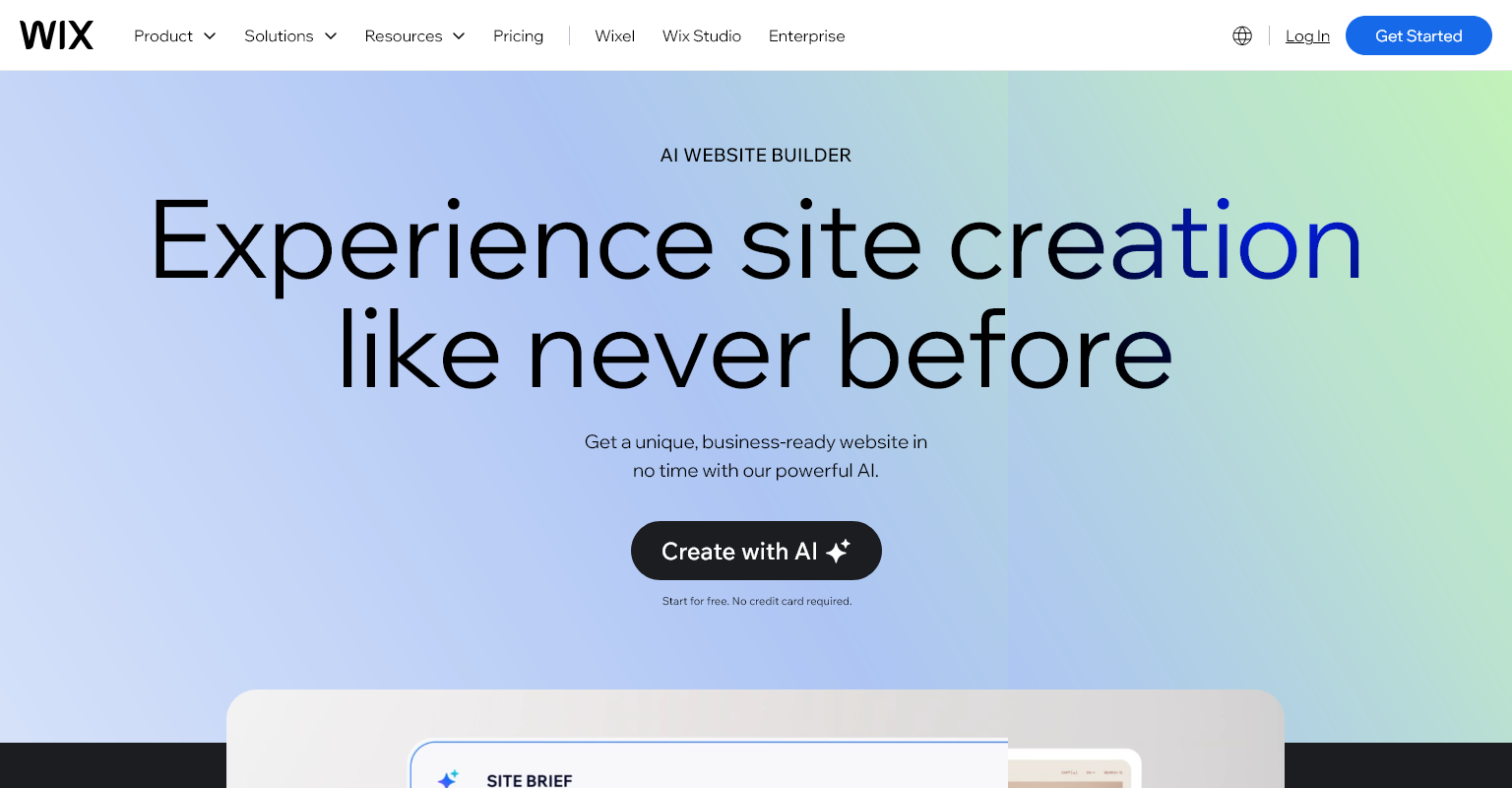
1. Wix ADI 3.0 (Wix AI Website Builder)

wix.comai-website-builder

Overview: Wix ADI 3.0 is an advanced AI-powered website builder that allows beginners to create polished websites with conversational inputs. It generates layout, content, images, and animations while optimizing SEO automatically. With built-in tools like Wix Logo Maker and Wix SEO Wiz, the platform offers a complete business-ready solution.

Website Link: https://www.wix.com/ai-website-builder

Features

  • AI-generated designs

  • AI content writer

  • Built-in SEO assistant

  • Online store builder

  • Booking system and CRM

Pricing (USD)

  • Website Plan: $8–$16/month

  • Business & eCommerce: $17–$32/month

2. WordPress + AI Plugins

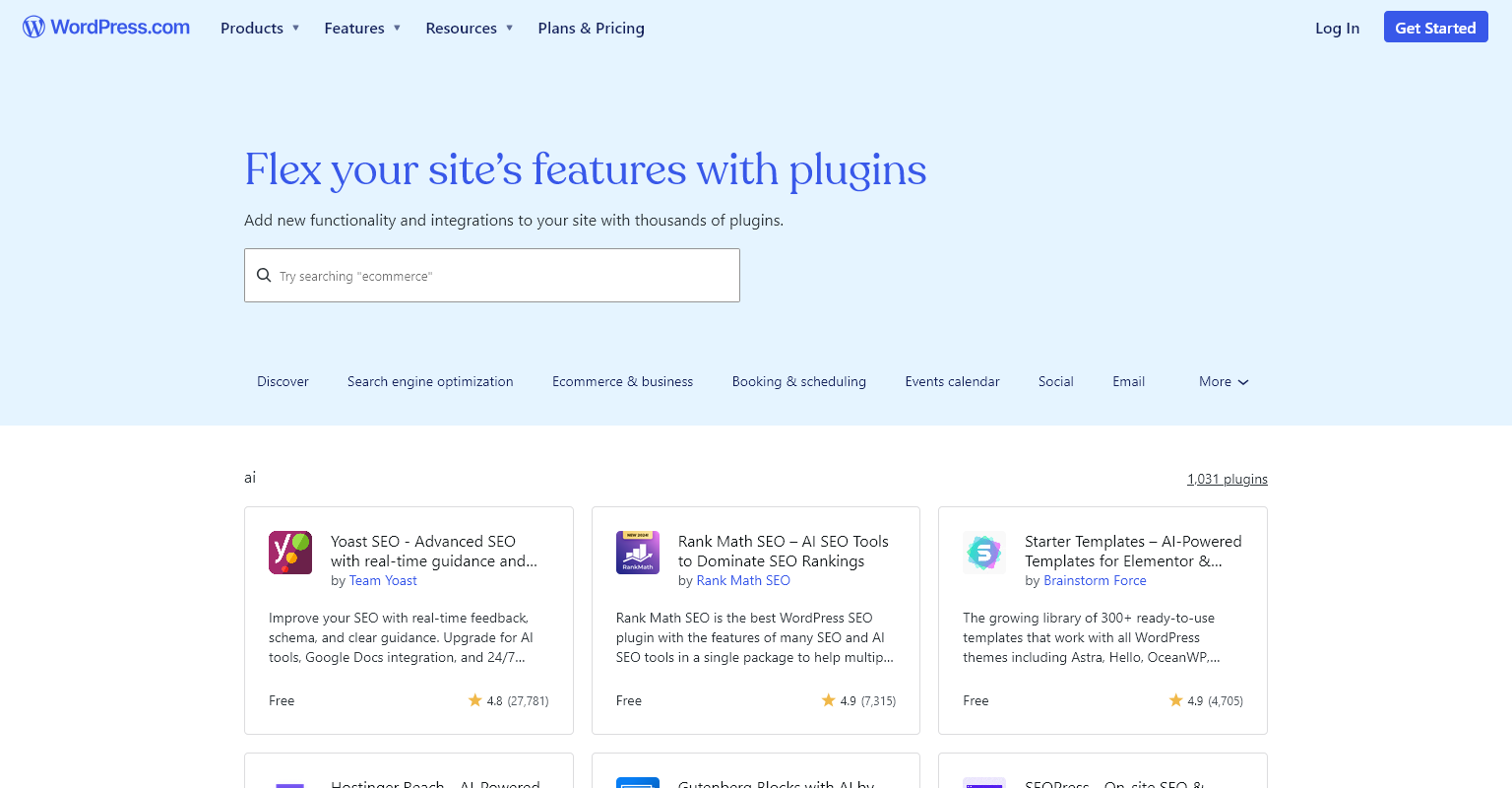
wordpress.complugins-browse-ai

Overview: WordPress remains the most customizable website system, enhanced in 2026 with tools like Elementor AI, Divi AI, Bertha.ai, and RankMath AI. These plugins help generate layouts, images, text, and SEO recommendations. While WordPress AI tools accelerate development, some manual work is still required — making it ideal for agencies, designers, and SEO-focused businesses.

Website Link: https://wordpress.com/plugins/browse/ai

Popular AI Tools

  • Elementor AI

  • Divi AI

  • ContentBot

  • Bertha AI

  • RankMath AI

Total Yearly Cost (USD)

  • Hosting + AI Plugins + Themes: $50–$150/year

3. Framer AI

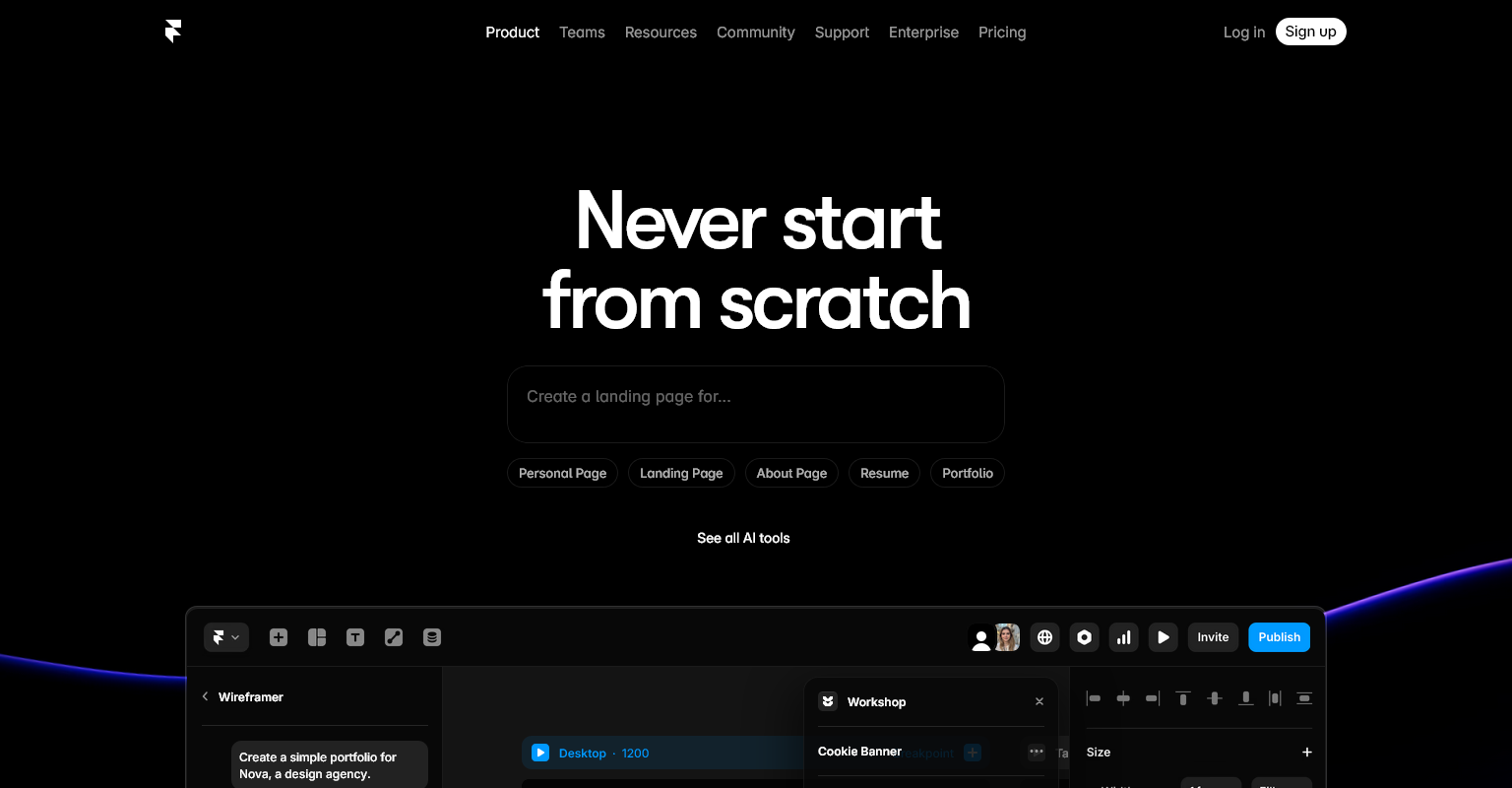
framer.com-ai

Overview: Framer AI dominates SaaS startups and landing page designs. With single-prompt site generation, rich animations, lightning-fast performance, and clean layouts, it is the go-to platform for modern web design. The built-in SEO engine further ensures high ranking potential for product launches and apps.

Website Link: https://www.framer.com/ai/

Pricing (USD)

  • Mini: $5/month

  • Basic: $10/month

  • Pro: $20/month

  • Business: Custom pricing

4. Webflow AI

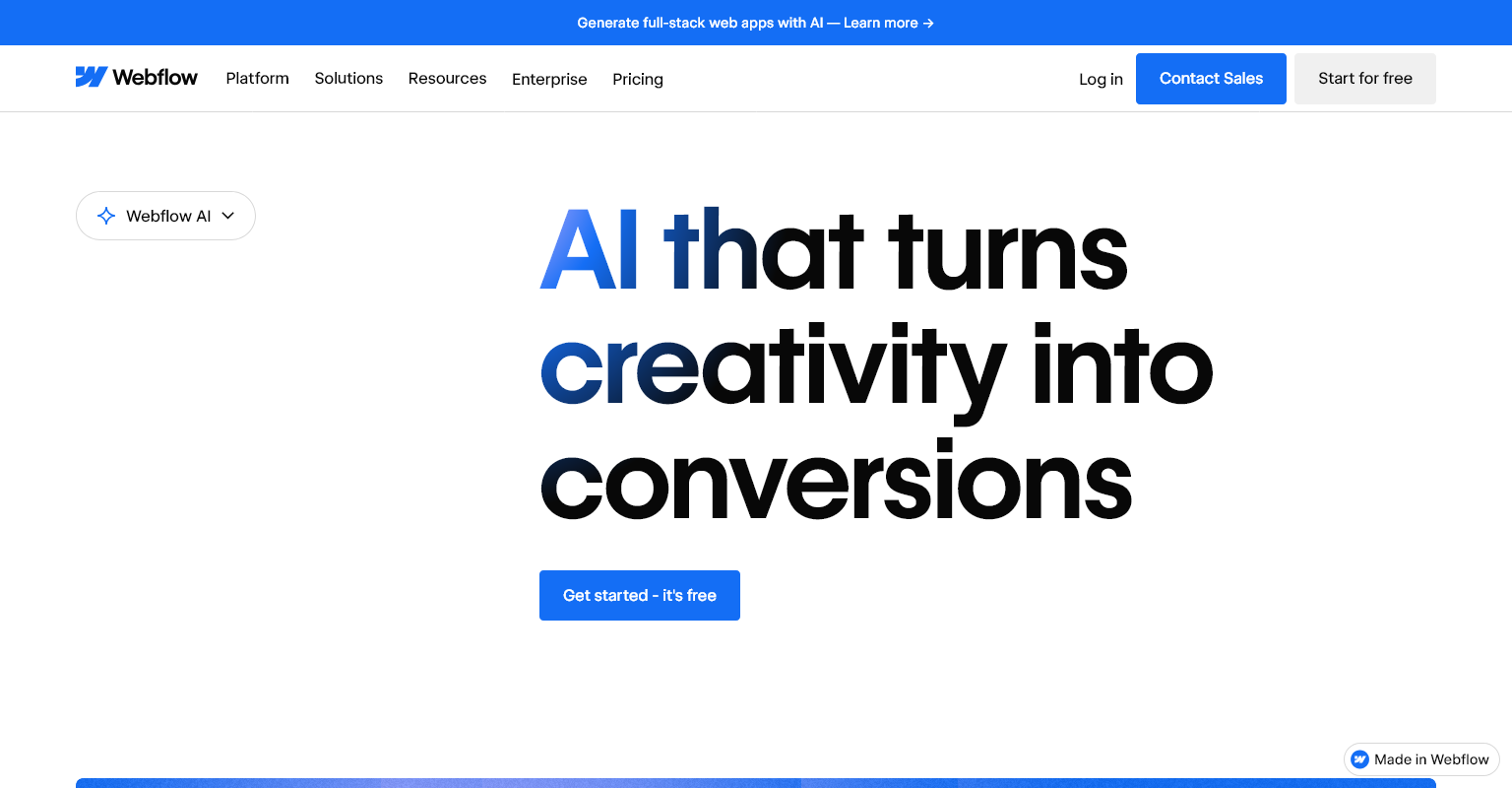
webflow.comfeature-ai

Overview: Webflow AI is a hybrid system combining visual design, CSS-level precision, and AI-powered content and layout generation. Built for agencies and professionals, Webflow allows you to convert prompts into components, adjust custom code, generate CMS structures, and edit pages using natural-language commands. It offers maximum creative control.

Website Link: https://webflow.com/updates/ai-site-builder

Pricing (USD)

  • Starter: Free

  • CMS Plan: $23/month

  • Business Plan: $39–$49/month

5. Durable AI Website Builder

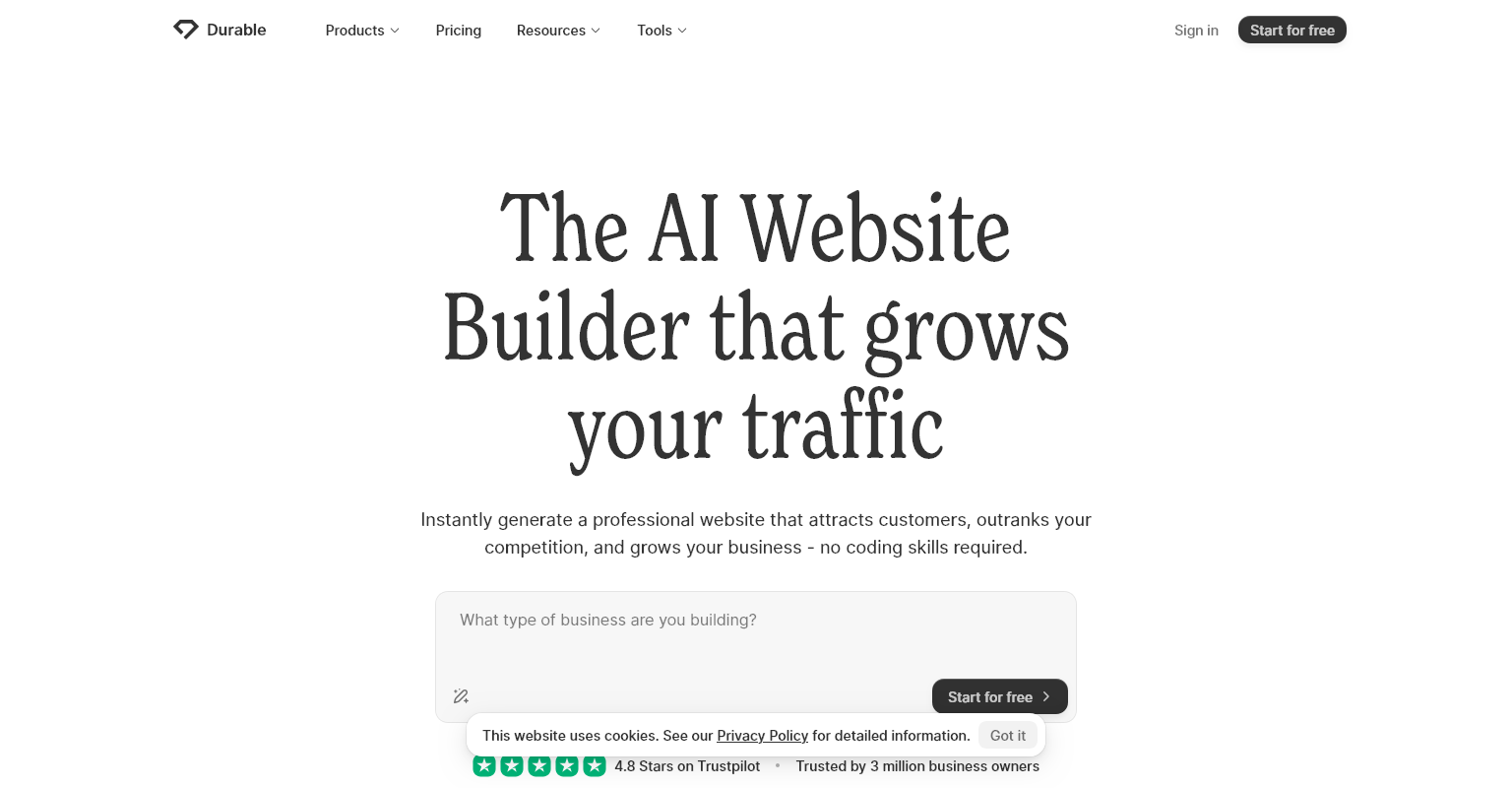
durable.coai-website-builder

Overview: Durable AI is popular for ultra-fast website creation — delivering complete sites in under 30 seconds. It writes copy, creates images, generates business descriptions, and offers built-in AI CRM and marketing tools. While customization is limited compared to Webflow or WordPress, it’s perfect for local businesses and solopreneurs needing instant online presence.

Website Link: https://durable.co/ai-website-builder

Pricing (USD)

  • Starter: $12/month

  • Business: $20/month

AI Website Creation Methods in 2026

AI-driven website creation works through several methods depending on the tool and level of customization. Some platforms instantly generate entire websites from text prompts, while others offer AI-assisted design, code generation, and hybrid workflows. This section explores all the popular AI methods used in 2026 to help beginners understand their options and choose the most suitable approach for their project.

Method 1: Prompt-Based Website Generation

You enter:
“Build a website for my digital marketing agency.”
AI generates everything automatically.
Best for: Non-tech users, small businesses.

Method 2: AI-Assisted Design Tools

AI suggests designs while you control editing.
Best for: Designers, agencies, perfectionists.

Method 3: Full AI Code Generation

AI writes custom code blocks, animations, and components.
Best for: Developers, technical users.

Method 4: AI + Human Hybrid Workflow

AI drafts → Human refines → Website launches
Best for: Businesses that need quality + speed.

Pricing Breakdown of AI-Generated Websites in 2026 (All in USD)

AI website creation is significantly cheaper than traditional web development. Instead of spending $500–$3,000 on manual designs, AI platforms offer subscription-based pricing that includes hosting, design tools, and AI features. This section provides clear, updated USD pricing for all major platforms in 2026, including additional costs for domains, templates, premium plugins, and AI content tools.

AI Website Pricing Table (USD)

Platform Monthly Price Best For
Wix AI $8–$32 Small business sites
WordPress + AI Tools $50–$150/year Blogs, agencies
Framer AI $5–$20 SaaS landing pages
Webflow AI $23–$49 Designers
Durable AI $12–$20 Local businesses

Additional Costs

  • Domain: $10–$15/year

  • Premium Templates: $20–$60 (one-time)

  • AI Text Tools: $5–$20/month

  • AI Image Credits: $5–$12/month

  • Plugins/Add-ons: $5–$30 each

Top AI Trends in Website Development (2026)

AI-driven websites in 2026 are smarter, more automated, and more user-focused. Modern AI platforms can design dynamic interfaces, generate 3D components, rewrite content based on user behavior, and auto-optimize SEO in real-time. Understanding the latest trends helps businesses stay ahead in a competitive digital world.

Major Trends

1. 60-Second AI Websites

Ultra-fast generation with near-professional accuracy.

2. AI-Powered 3D Design & Motion UI

AI generates 3D models, animated illustrations, and interactive UIs.

3. Natural Language Editing

You can now type:
“Add a dark theme and improve spacing.”
AI updates the entire layout instantly.

4. Real-Time Personalization AI

Content changes depending on the visitor’s location, device, or intent.

5. AI SEO Engines

Platforms autogenerate schema, sitemaps, metadata, speed optimizations, and keyword-rich content.

6. AI eCommerce Stores

Product writing, inventory syncing, image creation, ads → all automated.

Manual vs. AI-Generated Websites — Which is Better for SEO in 2026?

SEO remains one of the biggest deciding factors when choosing between AI-generated and manually built websites. While AI-generated sites offer solid basic SEO and fast performance, they still lack the deep customization and content quality needed for long-term competitiveness in tough niches. Manual websites dominate when it comes to advanced SEO techniques, custom-coded performance optimization, authority-building content, and complex site structures. This section compares both approaches clearly so you can make the best choice.

SEO Comparison Table

Feature AI Websites Manual Websites
Speed Optimization Good Excellent
On-Page SEO Good Excellent
Technical SEO Limited Full control
Content Depth Good High-quality human content
Code Quality Limited Fully customizable
Scalability Medium High
Ranking Potential Medium High
Cost Low Medium to high

Final SEO Verdict

Manual Websites Rank Better in 2026 because they offer deeper content quality, technical flexibility, and long-term authority.
AI Websites are ideal for small businesses, quick launches, and low-competition niches.

Final Recommendations — Which Website Should YOU Choose?

Your ideal choice depends on your goals, budget, and industry. AI-generated websites provide instant online presence, lower cost, and quick content generation — perfect for beginners, new businesses, and simple sites. Manual websites are the better option for strong SEO, brand identity, complex features, and competitive industries. This final section summarizes recommendations for different user types so you can confidently choose the best direction for your 2026 website strategy.

How SBM Technologies Helps You Build AI or Manual Websites (Promotional Ending)

At SBM Technologies, we build AI-powered and manual professional websites based on your exact requirements. Our services include:

✅ AI Website Creation (Wix AI, Framer AI, Webflow AI, WordPress AI)
✅ Custom Manual Web Design (WordPress, Webflow, HTML/CSS, WooCommerce)
✅ SEO-optimized content writing
✅ Lightning-fast performance
✅ Mobile-first design
✅ Affordable packages for startups
✅ Experienced team trusted by global clients since 2006

Whether you want a fast AI-generated website or a fully custom manual website, we deliver both — with world-class quality, SEO optimization, and complete business-ready setup.

Your website. Your style. Your choice.
SBM Technologies builds it perfectly — every time.